Project Overview
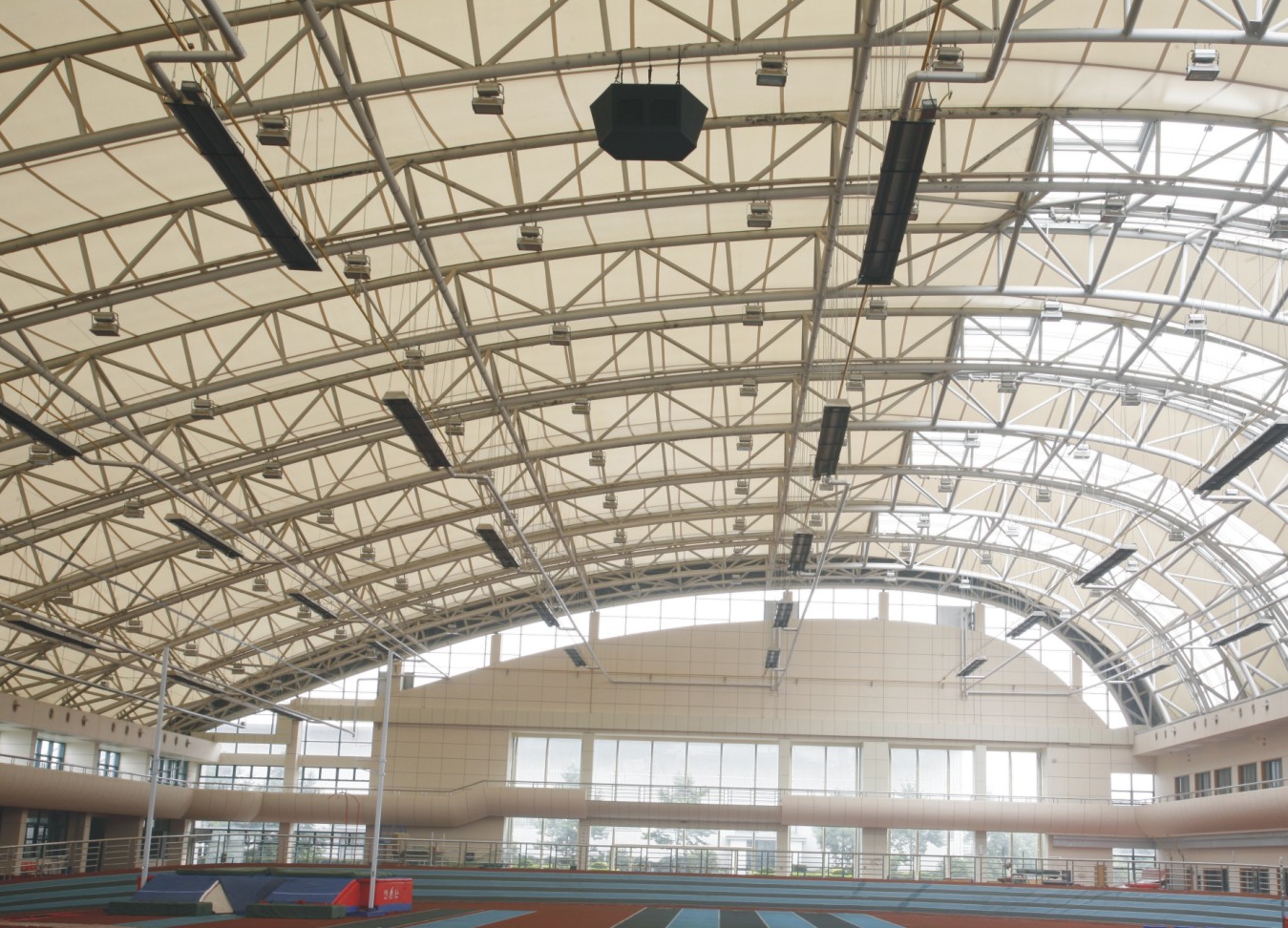
This project is an indoor athletics training hall with a total construction area of approximately 18,000 square meters. The core area features an arc-shaped steel structure roof with a span of 68 meters. As a professional sports venue, the interior is a closed environment with persistent high humidity and high carbon dioxide concentration. In addition, the steel structure roof must bear its own weight as well as the loads from suspended equipment, imposing stringent requirements on the durability, adhesion and environmental friendliness of anti-corrosion coatings.
The project ultimately selected an environmentally friendly solvent-free epoxy anti-corrosion coating system, applied to the surfaces of steel structure trusses and metal components. A high-reflectance functional topcoat was also matched to improve indoor lighting efficiency and reduce energy consumption.
Coating Selection and Technical Advantages
1. Core Materials
• Steel structure substrate: Solvent-free epoxy zinc-rich primer + epoxy micaceous iron oxide intermediate coat + high-reflectance acrylic polyurethane topcoat
• Auxiliary materials: Epoxy putty (used for leveling substrate defects)
2. Technical Highlights
• Solvent-free and environmentally friendly: The VOC content of the coating is ≤30g/L, far lower than national standards. There is no irritating odor during construction and use, meeting the indoor air quality requirements of sports venues.
• Superior anti-corrosion and adhesion: The epoxy zinc-rich primer has a zinc content of ≥80%, forming an electrochemical protection barrier with Grade 1 adhesion, effectively preventing steel structure corrosion in high-humidity environments.
• High reflectivity and energy saving: The topcoat uses high-refractive-index inorganic pigments with a visible light reflectance of ≥85%, which improves the utilization rate of natural light indoors and reduces lighting energy consumption by approximately 15%.
• Temperature change resistance and impact resistance: The coating can withstand temperature variations from -10°C to 50°C, and features excellent flexibility to adapt to micro-deformation of the steel structure, avoiding cracking and peeling.
Key Construction Processes
Substrate Preparation
Steel structure trusses are sandblasted to achieve Sa2.5 grade, removing oxide scale, rust and oil contaminants, with surface roughness controlled at 40–70μm.
Defective areas such as weld seams and bolt holes are leveled with epoxy putty to ensure qualified substrate flatness.
Primer Application
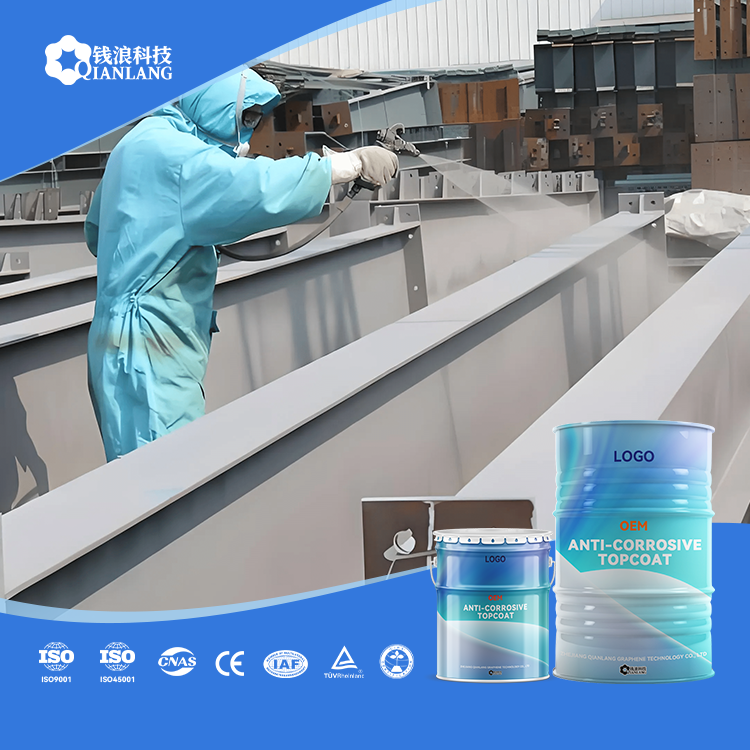
Solvent-free epoxy zinc-rich primer is applied evenly via high-pressure airless spraying, with a dry film thickness of ≥100μm. Ambient humidity is controlled to ≤80% during construction to ensure complete curing of the primer.
Intermediate Coat Application
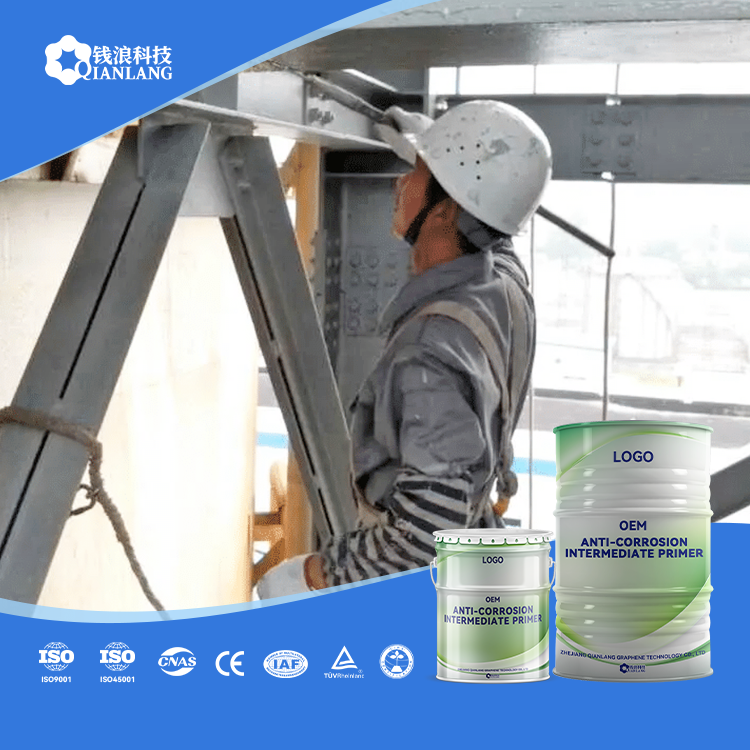
Solvent-free epoxy micaceous iron oxide intermediate coat is applied, with a dry film thickness of ≥150μm, forming a dense shielding layer to further block moisture and corrosive media from contacting the substrate.
Topcoat Application
High-reflectance acrylic polyurethane topcoat is applied in two coats, with a total dry film thickness of ≥80μm. A wet film thickness gauge is used for real-time monitoring during construction to ensure uniform coating thickness and consistent reflectance.
Quality Inspection
Upon completion, the project is verified through multiple indicators including adhesion cross-cut test, salt spray corrosion test, glossiness test and VOC content test. All test results are superior to the national Limits of Harmful Substances in Interior Decoration and Refurbishment Materials and the special standards for sports venues.
 EN
EN